

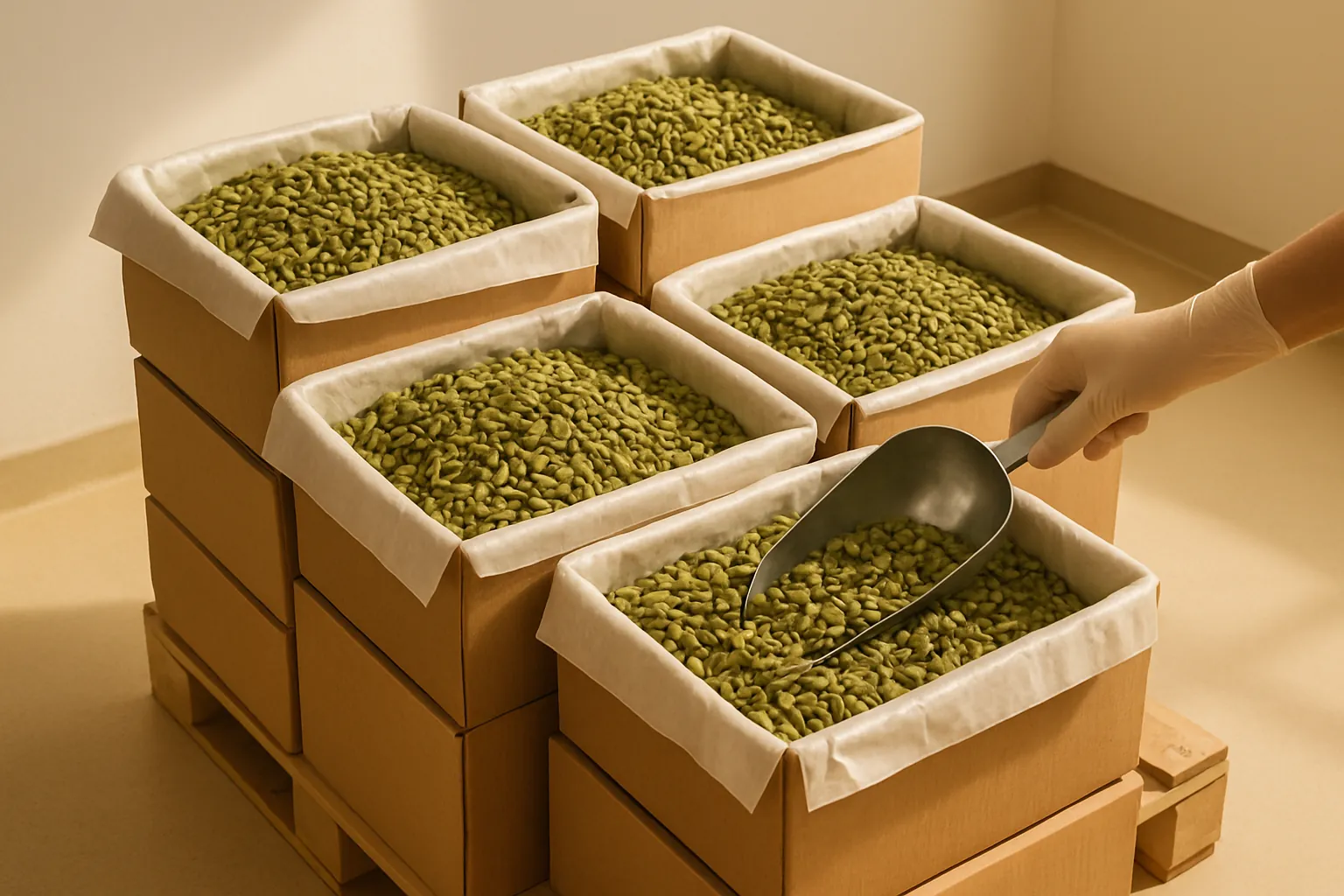
We built a free 16-minute course that follows one cardamom deal from a Riyadh spice house's first message to commission paid. This page is the written companion: the species fork, the colour lesson, the grading axes and the calendar.
Two plants, both called cardamom
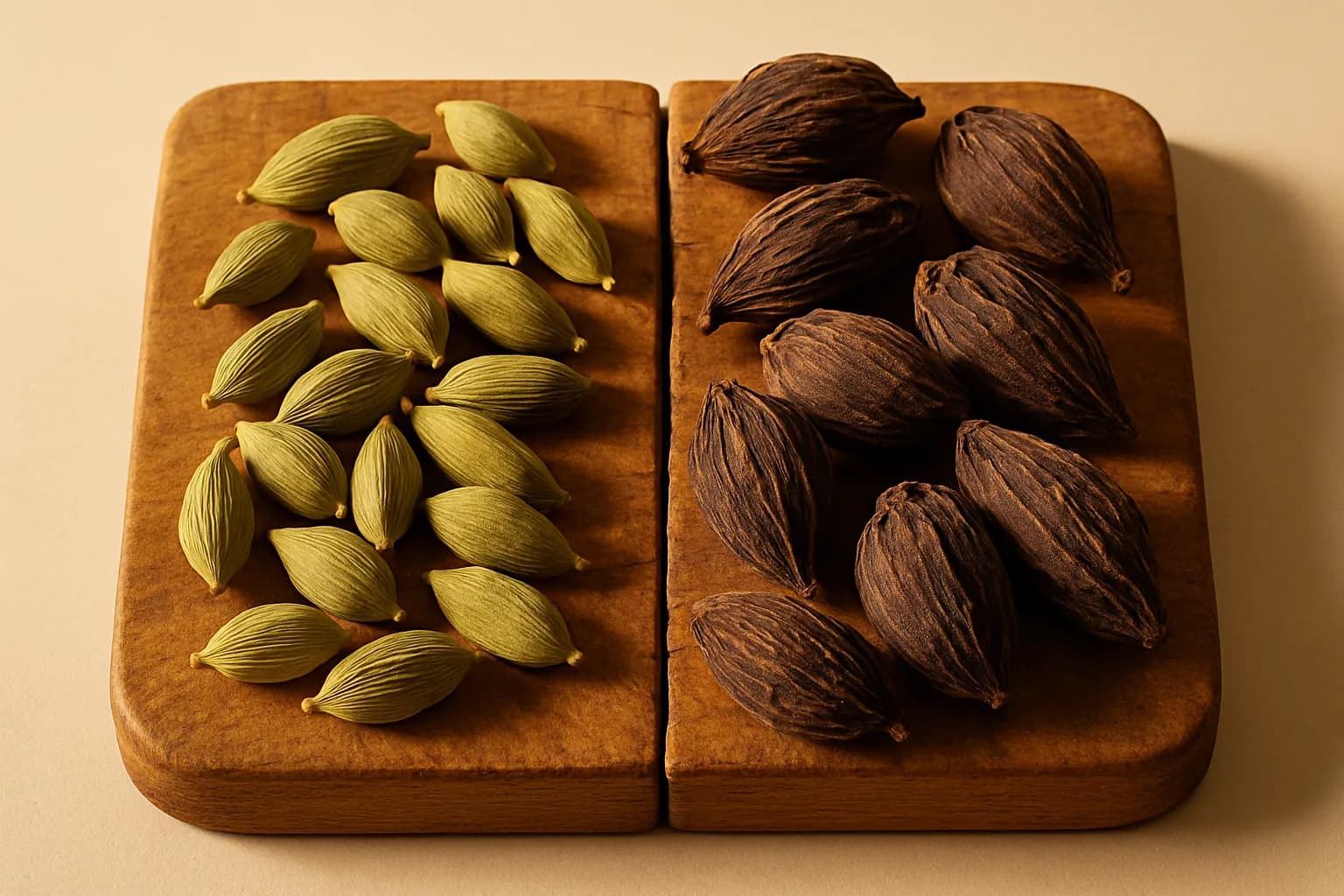
Green cardamom, Elettaria cardamomum, is what people mean when they say cardamom without qualifying it: small green pods, papery shell, tiny black seeds, sweet and cool. Black cardamom is a different species, Amomum subulatum, much larger and dried over open fire so it tastes strongly smoky. It costs far less and belongs in savoury cooking. Assume green unless told otherwise, and confirm it in writing. Within green cardamom there is a second fork: whole pods, which dominate the trade, or decorticated seeds sold to industrial grinders. Whole pods hold aroma far longer.
Colour is a decision, not luck
This is the part that makes you sound like someone who has stood in a curing house. Pods are picked at physiological maturity, deliberately before full ripeness: the capsule is still green but the seeds inside have darkened. Wait for complete ripeness and the pod splits as it dries; pick too early and you get shrivelled, poorly coloured pods. Then the pods are washed and dried, and that is where the money is made or lost. A curing house with gentle controlled heat holds the deep green colour; cheap open-sun drying bleaches it toward yellow. Same field, same picker, two completely different prices.
The four grading axes
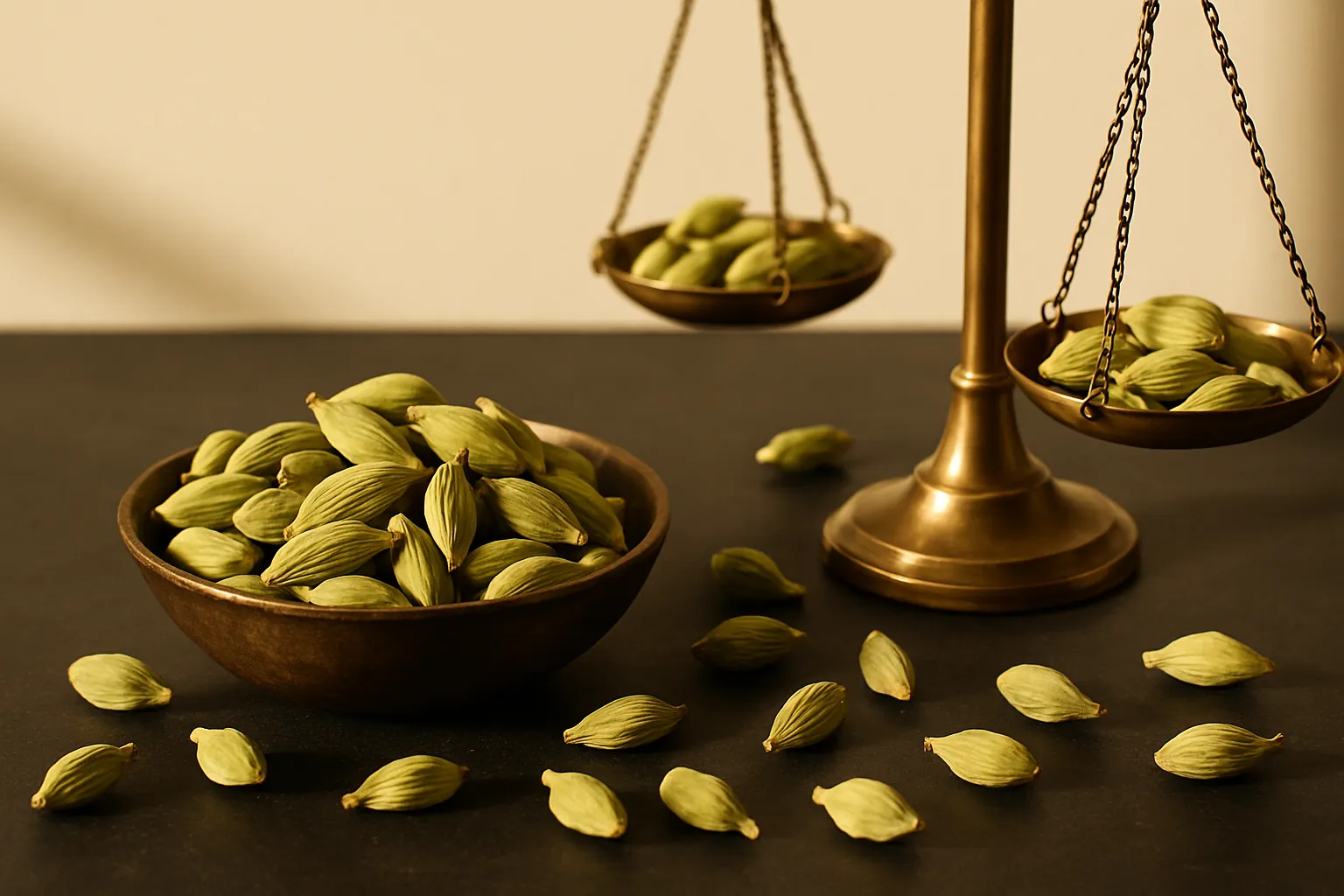
- Size, over screens with round holes: 8 mm and above is the showpiece grade, around 7-8 mm, 6-7 mm, and under 6 mm mostly destined for grinding. The premium for size is steep.
- Colour, which you now know is a curing decision. Deep green earns most; pale or yellowed pods fall away.
- Density, sometimes quoted as grams per litre, a quick proxy for how much seed is inside the shells rather than air.
- Defects: splits, empty pods, blackened pods, stalk and foreign matter. Some markets tolerate a few splits; the Gulf premium trade does not.
The numbers inside the pod
Volatile oil is the aromatic fraction and it is reported in millilitres per 100 grams, with many specifications setting a minimum around four. Cineole gives the cool eucalyptus note and terpinyl acetate the sweeter floral one, and the balance is part of why origins taste different, though no profile should be claimed for a lot without test results. Moisture is usually capped near 12 per cent. For food buyers the specification must also name Salmonella, aflatoxins and pesticide residues, plus whatever treatment the destination requires. Note that ethylene oxide is not permitted for food use in the European Union; steam treatment is a common accepted alternative, though heat can strip the very colour and oil you were paid for.
Origins, seasons and the Gulf calendar
Guatemala is the largest exporter of green cardamom by a wide margin and India is both a major producer and the biggest consumer, with auctions the world watches for price direction. Tanzania is a small player by tonnage, growing cardamom in the mountain forests of Morogoro and the Usambaras, and pretending otherwise loses credibility fast. Picking often begins around the middle of the year, in waves rather than one harvest, with timing varying by altitude and farm. On the demand side, Gulf buyers build inventory ahead of Ramadan, and Ramadan moves earlier through the Western calendar by roughly eleven days each year, so the buying window has to be recalculated every season.
Chapter guide
- 0:06 What business are you actually entering
- 0:44 From mountain to buyer
- 1:28 Green, black, pods and seeds
- 2:24 How the pods get their green
- 3:34 How cardamom is graded
- 4:45 Volatile oil, moisture and the spec
- 5:58 Origins, seasons and Ramadan
- 7:27 How cardamom is priced
- 8:16 Verify the supplier
- 9:22 Turning an inquiry into a deal
- 10:15 Payments and delivery terms
- 11:22 Freight, moisture and the fading clock
- 12:26 Shipment and documents
- 13:21 Who is allowed to export
- 14:29 How not to get scammed
Watch the full course and read the related guides:
Related reading
Leave a Comment
Your email address will not be published.