

The short supplier checklist
- The product is named clearly as green cardamom, Elettaria cardamomum, in whole-pod or decorticated-seed form.
- The grade uses a screen size or measurable specification, not only words such as premium or export quality.
- A representative sample is drawn from the commercial lot and part of it is retained for the arrival check.
- Moisture, foreign matter and any agreed volatile-oil, residue or microbiological tests are written into the contract.
- The supplier can connect the sample, laboratory report, packing list and shipment to one lot identity.
- The quote states weight, packing, Incoterm, payment terms, document set and expected shipment window.
- The supplier explains which cheaper grade will work when appearance does not matter.
Choosing a wholesale green cardamom supplier is not mainly about finding the lowest number per kilogram. It is about removing the gaps between what was sampled, what was contracted and what arrives. A good supplier makes those three versions of the product easy to compare. A weak supplier gives you attractive photos, loose quality words and a quote that hides important differences in grade or trade terms.
Start with the product form and end use
Tell the supplier what the cardamom will do in your business. Whole pods displayed in a clear retail pack need strong colour and a larger screen. Pods cracked into Arabic coffee need bold aroma and a workable repeat price. Cardamom sent into a mill should be chosen on aroma, moisture and usable seed rather than on perfect appearance. Bakeries and extractors may prefer decorticated seeds because they do not need the papery husk.
This first decision protects your margin. Buying 8 mm pods for an industrial grinder can mean paying for appearance that the process immediately destroys. Buying a smaller grade for a premium whole-pod pack can create the opposite problem. A supplier should help you make that trade-off in plain language.
Ask for a grade you can measure
Words such as premium, bold and export quality can mean different things to different sellers. A screen size is easier to check. Common commercial bands include 8 mm and above, 7 to 8 mm, 6 to 7 mm and a 6 mm shipment grade. The contract can also state colour against an approved sample, maximum moisture, foreign matter and empty-pod limits, plus a volatile-oil target where aroma performance is central to the purchase.
Treat the sample as part of the contract
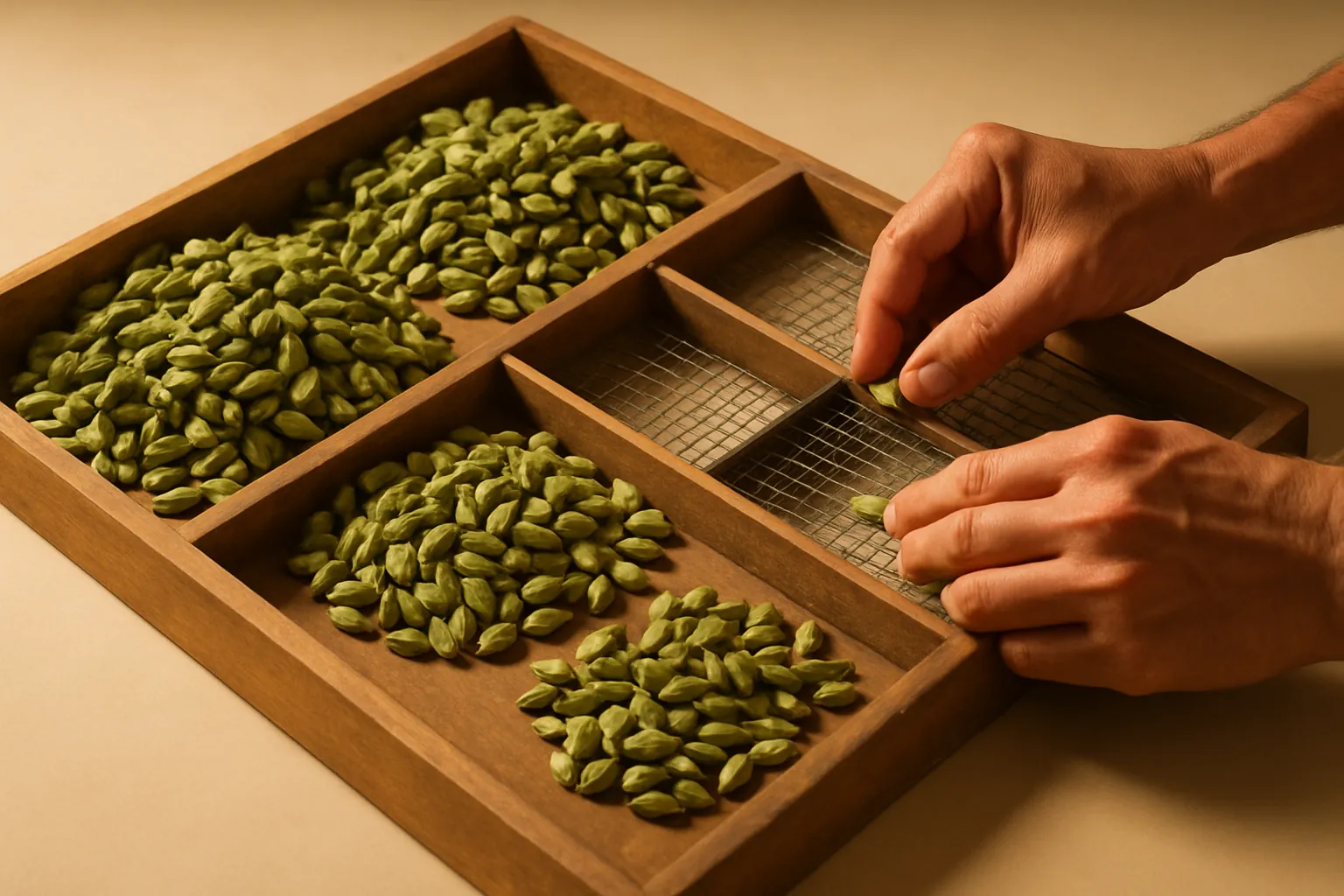
A beautiful handful selected for a photograph is not useful evidence. Ask for a representative sample drawn across the commercial lot. Check the pod size, colour, aroma, moisture and cleanliness. If the cardamom will be processed, put the sample through the same grinding, blending, brewing, baking or extraction test used in production. Keep part of the approved sample sealed and labelled so the arrival inspection has a real reference.
Read the laboratory report with the specification
A certificate of analysis is useful only when it belongs to the lot being shipped and reports the measures you agreed. Moisture and foreign matter are basic buying points. Volatile oil can help buyers focused on aroma, but the method and minimum need to be stated. Destination-specific residue, contaminant or microbiological panels should be agreed with the importer before the order, not requested after the cardamom is already packed.
Compare the full commercial basis
Place the quotes side by side only after normalising them. Check the net weight, product grade, pack size, liner, pallet format, Incoterm, payment terms, laboratory panel, export documents and shipment window. An FOB quote cannot be compared directly with a delivered price. A seed quote cannot be compared with a whole-pod quote without considering husk and usable yield. A wet lot may look cheaper per kilogram while giving you less dry aromatic material.
Check the document and traceability chain
The document set depends on the destination and contract, but it normally starts with the commercial invoice, packing list, certificate of origin, transport document and any phytosanitary or laboratory records required for the shipment. Lot codes should connect those documents to the packed cartons. Your importer or customs adviser should confirm the current destination requirements before booking.
Use a first order that can teach you something
Our starting commercial MOQ is 500 kg of one grade. That is enough to test a serious receiving and production process without forcing a buyer into a full container. Define the incoming inspection before the order leaves Tanzania, including where samples will be drawn, what will be checked and who holds the retained reference. The result gives both sides a clean basis for a repeat programme.
Plan your next step
- Wholesale green cardamom supplier overview- MOQ, grades, process and documents
- Compare all wholesale grades- Whole pods and decorticated seeds
- How to read a cardamom certificate of analysis- Moisture, oil, cleanliness and lot identity
- Request a representative sample and quote- Send end use, volume and destination
Related reading

Leave a Comment
Your email address will not be published.