
At a glance
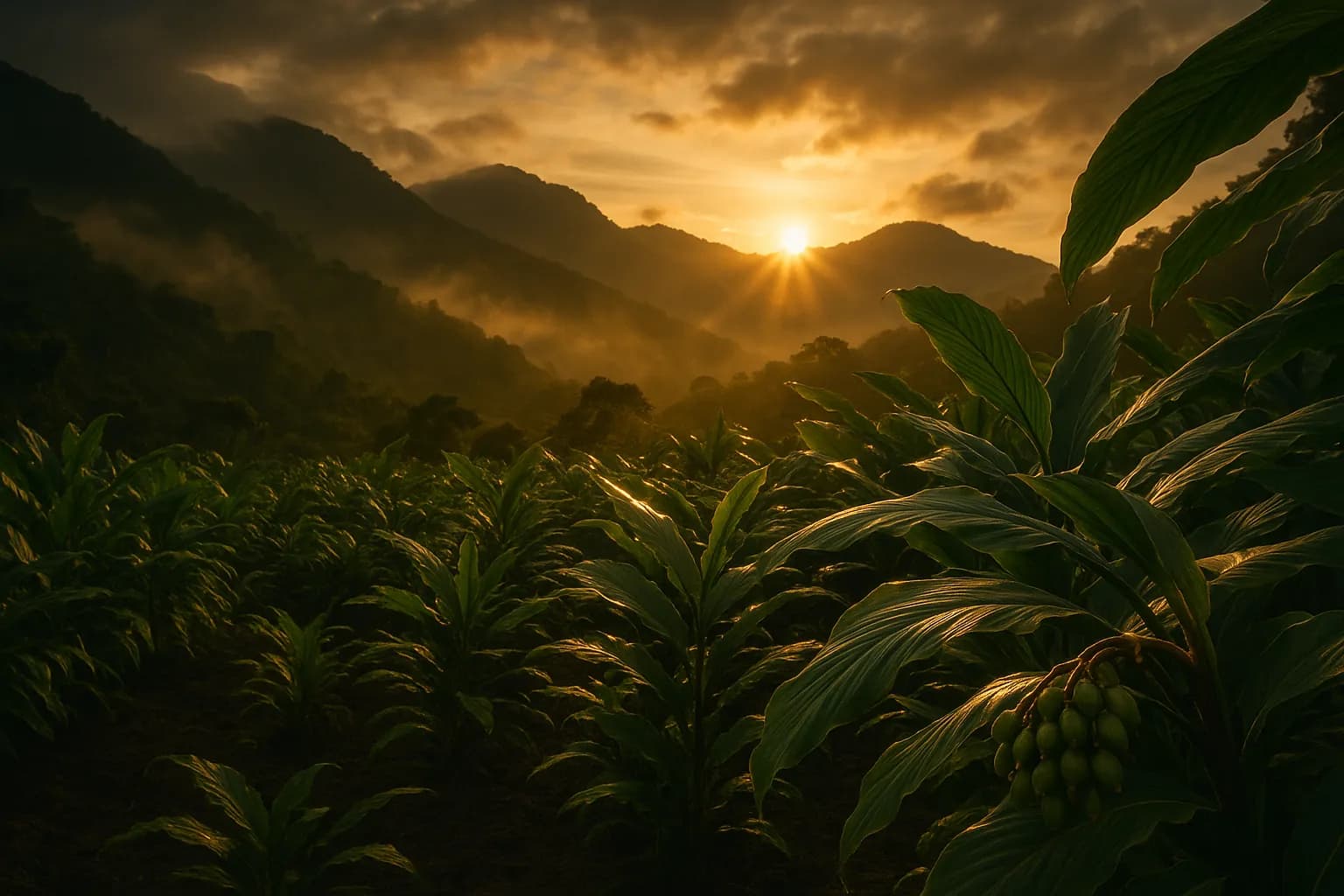
- Tanzanian cardamom grows in the Eastern Arc highlands, the Uluguru Mountains (Morogoro) and Usambara Mountains (Tanga).
- The plant is a shade-loving forest understorey species, grown under canopy in cool, humid highland conditions.
- It is perennial; a planting yields for years, and pods on one plant ripen unevenly across the season.
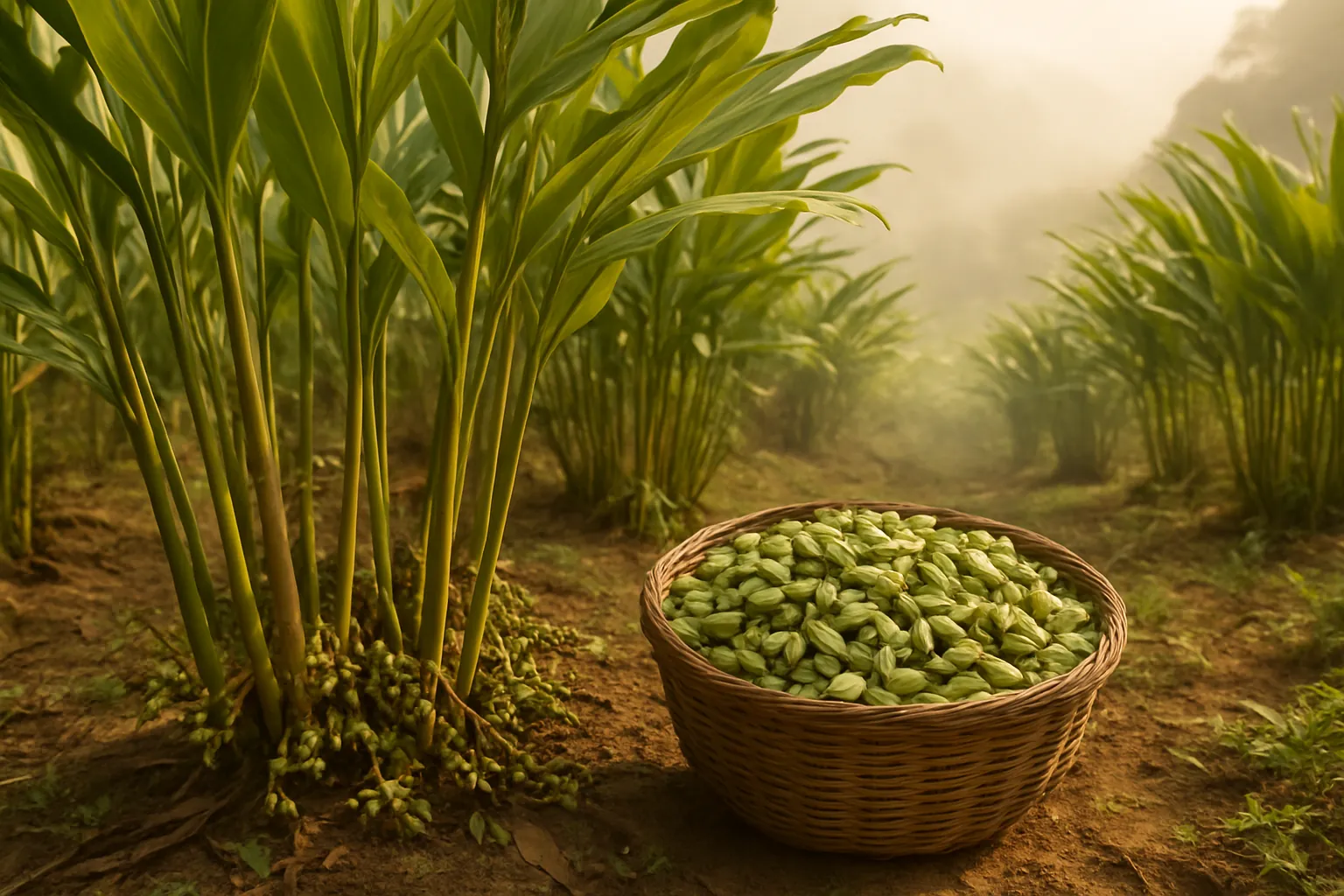
- Harvest is by hand in several rounds, picking pods at about three-quarters maturity to keep colour and avoid splitting.
- Curing is slow and low-temperature, gentle heat, not direct sun, to lock in green colour and volatile oil.
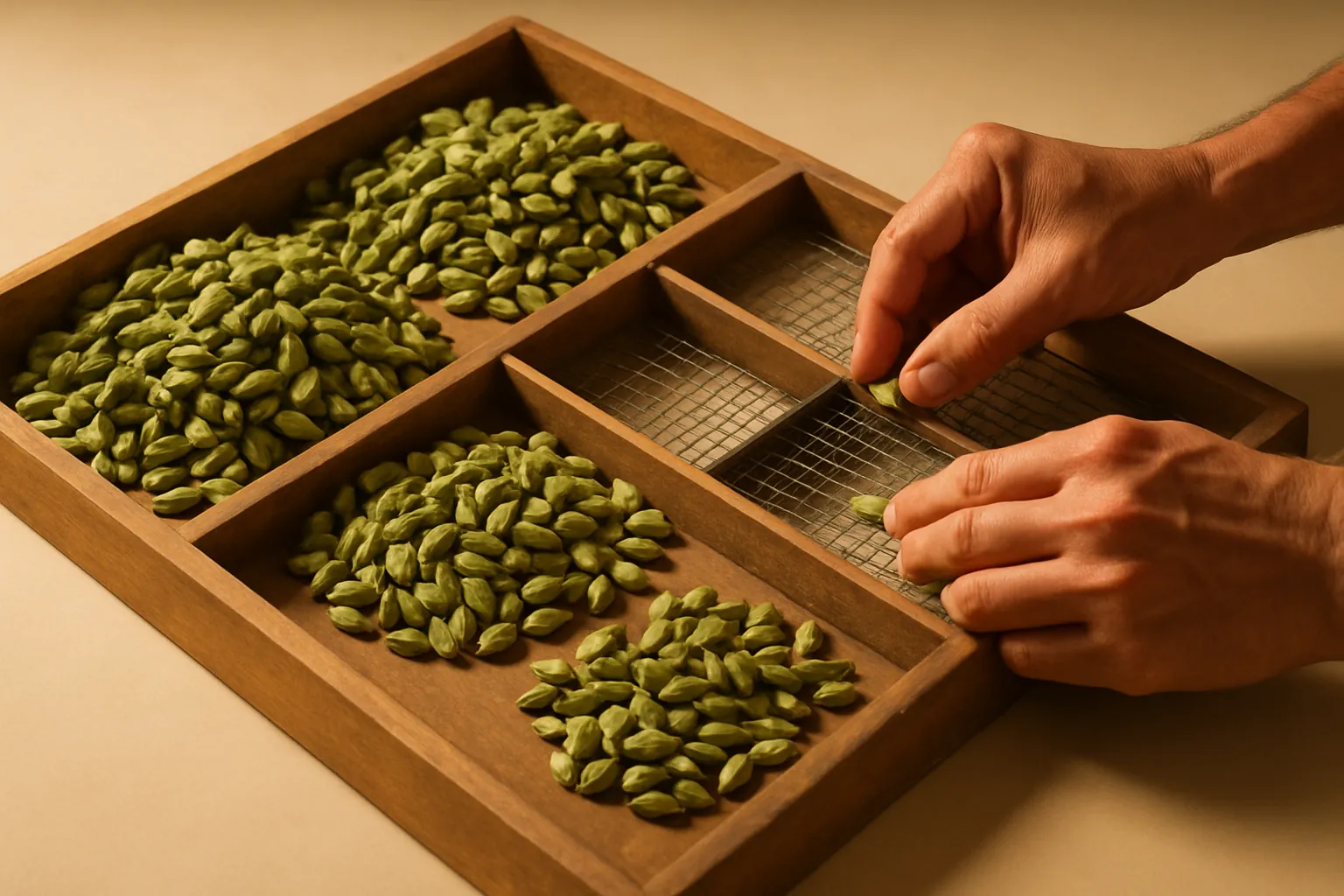
- Pods are cured to roughly 10–12% moisture, then sized and graded against the trade screens.
The green in a good cardamom pod is not an accident of the plant; it is the visible result of dozens of small decisions between the mountain and the carton. Tanzania's cardamom comes from the Eastern Arc highlands, some of the oldest and most biodiverse forest country in Africa, and the way it is grown, picked and cured there is what separates a deep-green, aromatic lot from a pale, tired one. This is the crop's journey, shade cultivation, patient multi-round harvest, and the slow cure that locks in everything a buyer pays for.
Where does Tanzanian cardamom grow?
In the highlands of the Eastern Arc mountains, principally the Uluguru range that rises behind Morogoro and the Usambara mountains of the Tanga region. These are cool, humid, forested uplands, and their climate is the whole reason cardamom does well there. Elettaria cardamomum is not a full-sun field crop; it is a highland understorey plant that wants altitude, steady moisture and shade. The Eastern Arc provides all three, and its long history of forest cover gives the deep, humus-rich soils the crop prefers. Growing here is less about imposing a plantation on the land than about placing the plant where it already wants to be.
Why grow cardamom under shade?
Because the plant evolved beneath a forest canopy, and it performs best when that condition is respected. Shade moderates temperature and light, protecting the plants from the heat stress that stunts pod development, and it helps the soil hold moisture through drier spells. Growing cardamom under canopy, alongside standing trees rather than in cleared, full-sun rows, also fits the ecology of the Eastern Arc, where forest matters. For the pod, the payoff is colour and aroma: plants that are not heat-stressed set well-filled, deep-green pods, and deep green is the first thing curing then has to preserve.
How is the crop harvested?
By hand, patiently, over several rounds. Cardamom is perennial, a planting comes into bearing a couple of years after establishment and then yields for years, and the pods on a single plant do not all ripen at once. So harvest is not a single event but a series of pickings across the season, with pickers returning every few weeks to take the pods that have reached the right stage and leaving the rest to develop. The judgement that matters most is when to pick: pods are taken at about three-quarters maturity, mature enough to carry full aroma but before they ripen fully and split. Picking slightly green is exactly what keeps the cured pod green.
“You cannot rush a cardamom field into ripening together, and you should not try. The plant sets its pods on its own schedule, and the reward for picking to that schedule, round after round, is a lot that grades bold and cures green.”
- Asha Ngonyani, Quality Manager
How is cardamom cured to lock in colour and aroma?
This is the decisive step, and it is where careless drying ruins otherwise good pods. Freshly picked cardamom is too wet to store and must be dried down to roughly 10 to 12 per cent moisture, but how it is dried decides everything. We cure slowly at a low, controlled temperature in curing rooms, using gentle heat that pulls moisture out without cooking the pod. The alternative, drying in direct sun or over fierce heat, is faster and far worse: it bleaches the chlorophyll toward straw and drives off the volatile oil that carries the aroma. Slow, cool curing keeps the green in the husk and the oil in the seed, which is why our lots reach the sizing screens deep-coloured and fragrant.
From cured pod to graded lot
- Cure to roughly 10–12% moisture at a low, controlled temperature, protecting colour and oil.
- Clean and sort, removing stalks, splits, immature pods and extraneous matter.
- Size over graded screens into Extra Bold (8 mm+), Bold (7–8 mm), Superior (6–7 mm) and Shipment (around 6 mm).
- Lab-check moisture, cleanliness and, where required, volatile-oil content before despatch.
- Record lot and district traceability, then pack into vacuum or foil-lined cartons for export.
The result is a single-origin lot a buyer can trace to a mountain range and a curing batch, graded against the same screens the international trade uses. Everything a buyer values in the pod, size, colour, aroma, is set in these steps, long before the carton is sealed. If you want to understand what that curing preserves in flavour terms, our essential-oil guide picks up where this one leaves off.
Related reading
Related reading
Leave a Comment
Your email address will not be published.