
At a glance
- Elaichi is the Hindi and Urdu word for cardamom; used on its own it means green cardamom, the species Elettaria cardamomum.
- Elaichi and green cardamom are the same spice, the name changes with the language of the purchase order, not the pod in the bag.
- Hari elaichi (green), sabz elaichi (green) and choti elaichi (small) all mean green cardamom, the sweet, floral pod used in chai, baking, desserts and Gulf coffee.
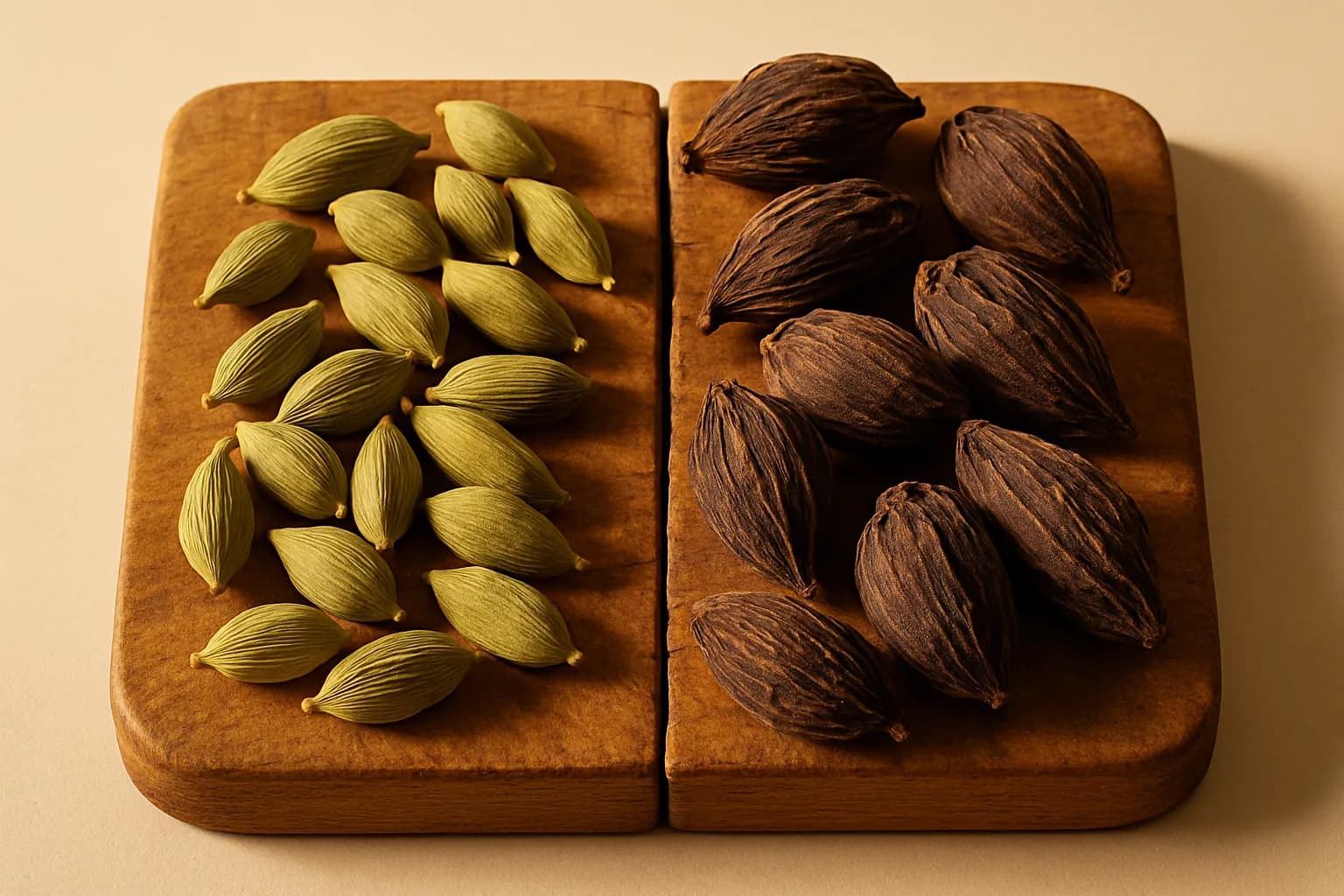
- Badi elaichi (large) and kali elaichi (black) mean black cardamom, Amomum subulatum, a different plant, flame-dried and smoky. We do not supply it.
- In the trade, elaichi is bought by pod size: bold 8 mm+, 7–8 mm, 6–7 mm, 6 mm shipment grade, plus decorticated seeds.
- Ask any elaichi contract to state pod size in millimetres, moisture at roughly 10–12%, volatile oil of about 6–8% on whole pods, a colour reference and a cleanliness limit.
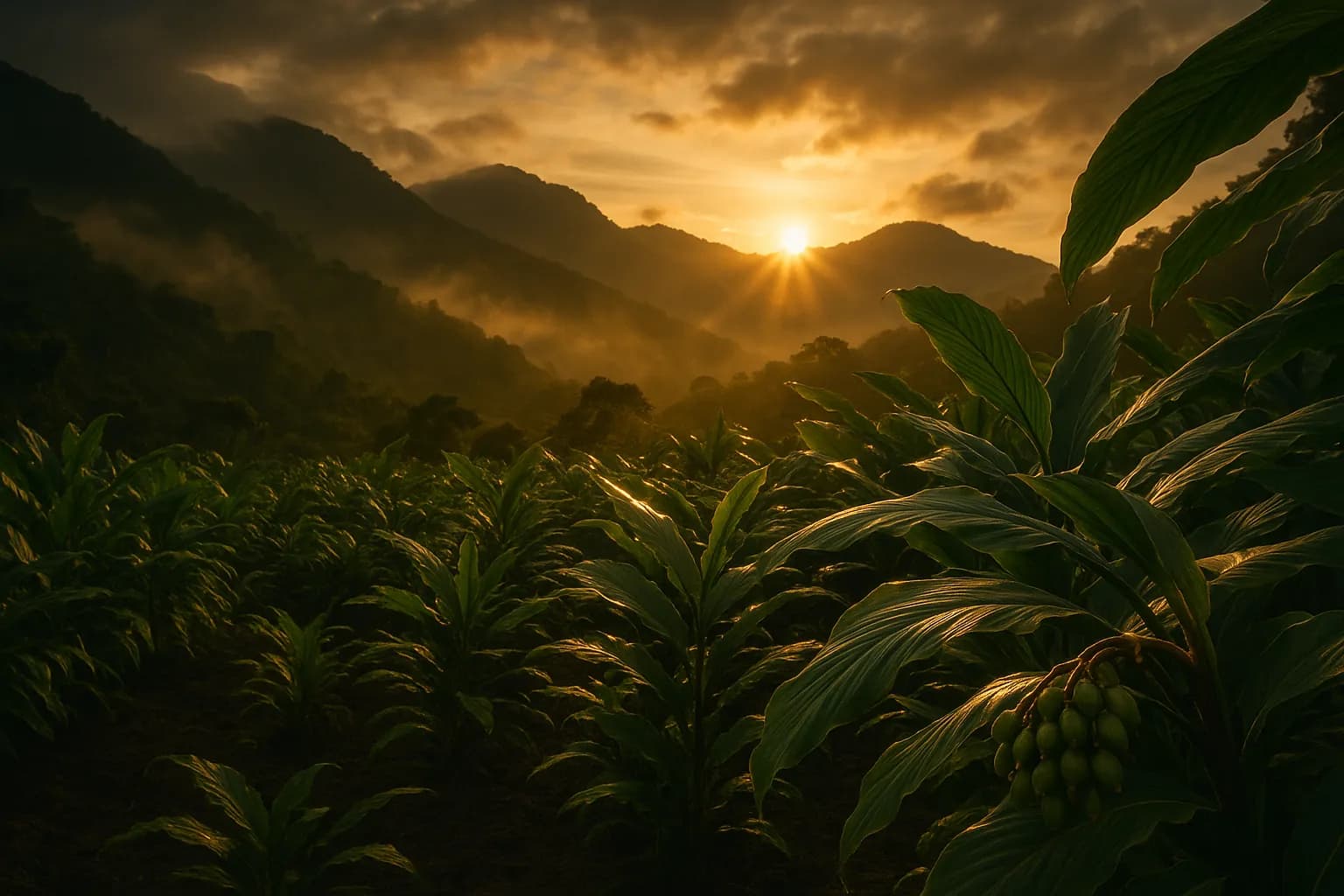
- Our elaichi is single-origin Tanzanian, grown in the Eastern Arc highlands of Morogoro and Tanga and cured slowly for green colour.
Elaichi is the Hindi and Urdu name for cardamom, and when the word appears on its own it means green cardamom, the spice botanists call Elettaria cardamomum. Elaichi and green cardamom are two names for one thing: the same small, ribbed, pale bottle-green pod, the same sweet and floral aroma, the same grading sheet. That answer settles most of the confusion, but not all of it, because South Asian kitchens divide cardamom further, into hari, choti, badi and kali elaichi, and only some of those names describe the spice we grow and export. This guide sets out what each term actually means and, more usefully for anyone about to place an order, maps the vernacular names onto the trade grades an exporter quotes against.
Is elaichi the same as green cardamom?
Yes, they are identical. Elaichi (also written ilaichi, elachi or elaichee) descends from the Sanskrit elā, and the word travelled with the spice itself into Urdu, Gulf Arabic, Swahili and the kitchens of the South Asian diaspora. An English-language contract will say 'green cardamom' or, in older documents, 'true cardamom'. A buyer in Delhi, Karachi, Dubai or Leicester may simply write 'elaichi'. Both describe a pod roughly one to two centimetres long, three-sided and ribbed, pale bottle-green when properly cured, enclosing small dark seeds that carry the aroma. Nothing about the specification, the grading screen or the price responds to which word you use.
Which elaichi names mean what?
The vernacular terms are descriptive rather than technical, they name the colour or the size of the pod, which is why they map so cleanly onto the trade once you know the pattern:
- Elaichi / ilaichi / elachi, cardamom in general; used alone it means green cardamom. This is our product.
- Hari elaichi, literally 'green cardamom'. Elettaria cardamomum. Our product.
- Sabz elaichi, the Urdu equivalent of hari elaichi. Green cardamom again.
- Choti elaichi, literally 'small cardamom'. The same green pod, named for its size relative to the black one. Our product.
- Badi elaichi, literally 'large cardamom'. Black cardamom, Amomum subulatum. A different plant, and not something we supply.
- Kali elaichi, literally 'black cardamom'. Another name for badi elaichi.
- Elakkai, yalakki, velchi, Tamil, Kannada and Marathi names for the same green pod.
What is the difference between hari and badi elaichi?
They are two different spices from two different plants, not a light and dark version of one crop. Hari or choti elaichi is Elettaria cardamomum: small green pods with a sweet, floral, faintly citrus aroma, cured gently at low temperature to hold their colour. Badi or kali elaichi is Amomum subulatum: pods two to four centimetres long, dark brown, with a coarse wrinkled husk, dried over open flame so that they carry a smoky, resinous, almost camphorous depth. Green elaichi perfumes and finishes a dish, masala chai, Scandinavian cardamom buns, Middle Eastern desserts, Gulf coffee. Black elaichi grounds a savoury one, biryani, dal, slow-cooked curries and garam masala. Substituting one for the other does not change the intensity of a dish, it changes its character. Our green versus black cardamom guide takes the comparison further, pod by pod and kitchen by kitchen.
Do you supply badi elaichi?
No. We supply green cardamom only, and we say so plainly because origin claims are the one thing a spice buyer cannot verify from a photograph. Badi elaichi is grown chiefly in the eastern Himalaya and is a separate crop with a separate supply chain; we do not handle it, cure it or represent it as ours. What we do handle is single-origin Tanzanian green elaichi, from gardens we buy from directly, cured in batches we can name and tested lot by lot. If your recipe genuinely needs black cardamom, buy it from someone who grows it, and buy your green from us.
“Nobody confuses the two spices once they have smelled both. They confuse the words on a purchase order, and by then the pods are already in a container.”
- Neema Kessy, Editorial Lead
How do elaichi names map onto trade grades?
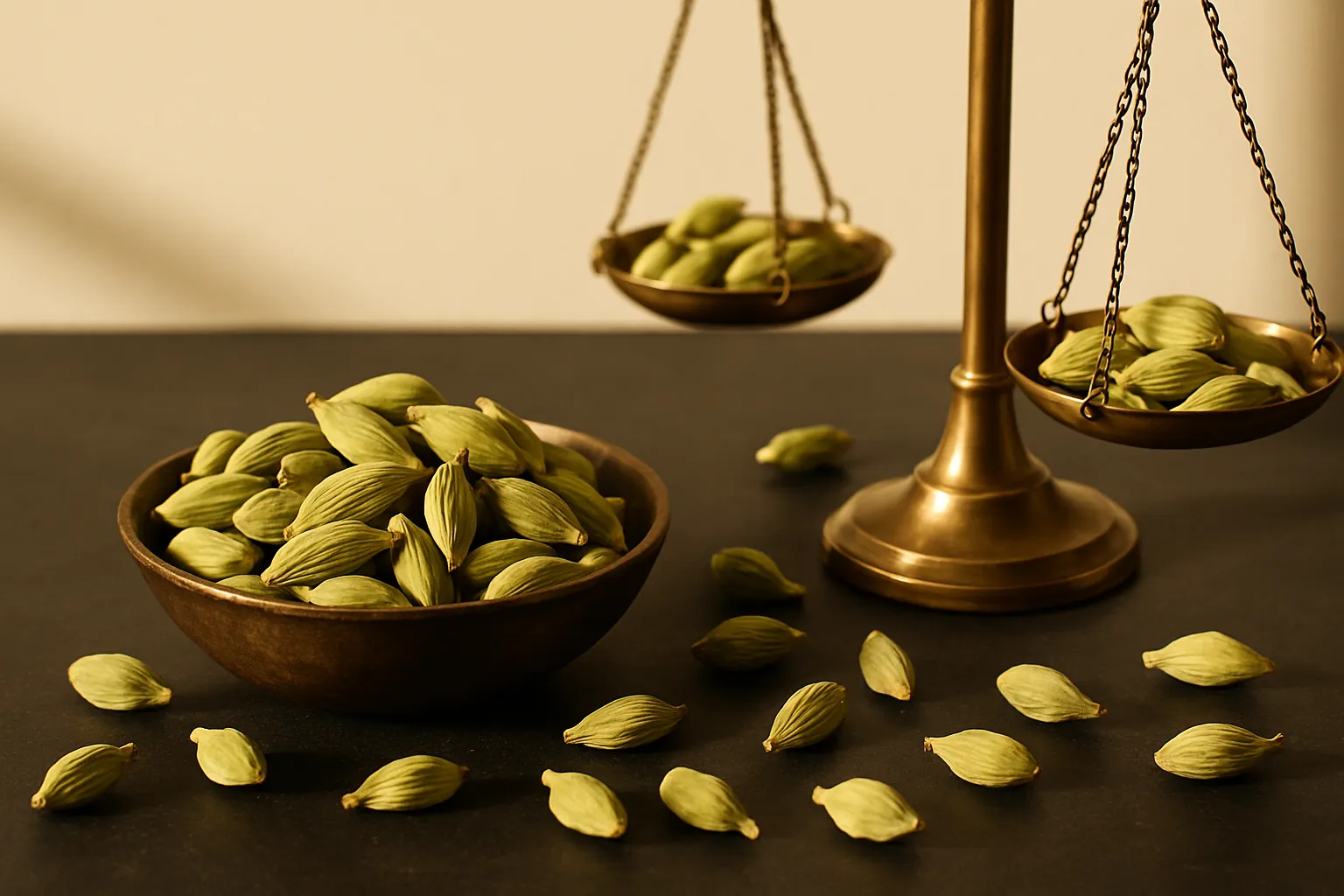
Once a buyer moves from the kitchen to a contract, 'hari elaichi' stops being enough. Green cardamom is traded by pod size, measured by passing cured pods over graded screens and taking the fraction retained at each mesh, so a grade names the size of pod in the bag rather than an average. Larger pods hold more seed and more volatile oil per kilogram, which is why size drives price. These are the grades we cut to:
- Bold, 8 mm and above, the largest, greenest, best-filled pods. Known in the Indian trade as Extra Bold or AGEB.
- 7–8 mm, large uniform pods with strong colour; the Bold or AGB band.
- 6–7 mm, the everyday grade for grinding, chai masala and food manufacturing; the Superior or AGS band.
- 6 mm shipment grade, sound, consistently sized smaller pods for high-volume grinding, extraction and oleoresin.
- Decorticated seeds, pods hulled so only the aromatic seed remains; because no husk dilutes the weight, volatile oil reads higher per kilogram.
Which elaichi grade should I buy?
Match the grade to what the pod has to do, not to the top of the price sheet. A grinder paying a colour premium for 8 mm pods that go straight into a mill is buying appearance it will destroy in the first thirty seconds:
- Premium retail, gifting, festival packing and anywhere the pod is seen whole, bold 8 mm+.
- Quality retail packs, hotel and hospitality blends, whole-pod cooking, 7–8 mm.
- Chai masala, garam masala, general grinding and food manufacturing, 6–7 mm.
- Bulk grinding, oleoresin and essential-oil extraction where only aroma yield counts, 6 mm shipment grade.
- Spice blenders and confectioners who do not want husk in the weight, decorticated seeds.
What should an elaichi specification state?
Put the numbers in writing before the lot is packed, not after it lands. A workable green-cardamom specification names the grade and screen size in millimetres, a colour reference, moisture held at roughly 10 to 12 per cent, a volatile-oil floor, whole pods typically run around 6 to 8 per cent, and limits on foreign matter, empty pods and splits. Add the packaging format and the Incoterm and you have a contract that can be checked rather than argued about. Every lot is laboratory-tested before despatch, and lot records tie back to the growing district, so a delivered consignment can be measured against the sample it was sold on.
Where is our elaichi grown?
In Tanzania's Eastern Arc highlands: the Uluguru Mountains above Morogoro and the Usambara Mountains of Tanga. Cardamom is an understorey plant, and the shaded, cool, humid forest margins of these ranges suit it, slow ripening, dense aroma, deep green skin when the curing is handled with patience. India and Guatemala are the giants of the global cardamom trade and set the benchmark vocabulary the whole market uses, which is why our grades are cut to the same screens and quoted against the same AGEB, AGB and AGS names. But the pods themselves are Tanzanian, from a single origin, shipped FOB Dar es Salaam. If you have been searching for elaichi and you now know which grade you need, tell us the pod size, colour expectation and volume and we will confirm availability and quote.
Order elaichi by grade
- Wholesale green cardamom supplier overview- grades, MOQ, testing and shipping in one place
- Bold Green Cardamom 8 mm+- Extra Bold · the premium whole pod
- Green Cardamom 7–8 mm- Bold · retail and hospitality standard
- Green Cardamom 6–7 mm- Superior · the chai and grinding grade
- Decorticated Cardamom Seeds- Husk removed · higher oil per kilogram
- How green cardamom is graded- Size, colour, moisture and the AGEB names
- Green vs black cardamom- Choti elaichi vs badi elaichi, side by side
- Talk to our export desk- Samples and FOB quotes
Related reading
Leave a Comment
Your email address will not be published.