

At a glance
- Our starting commercial MOQ is 500 kg of one grade, not a full 19 to 20 tonne container.
- A representative courier sample comes first so the buyer can approve grade, colour, moisture and aroma.
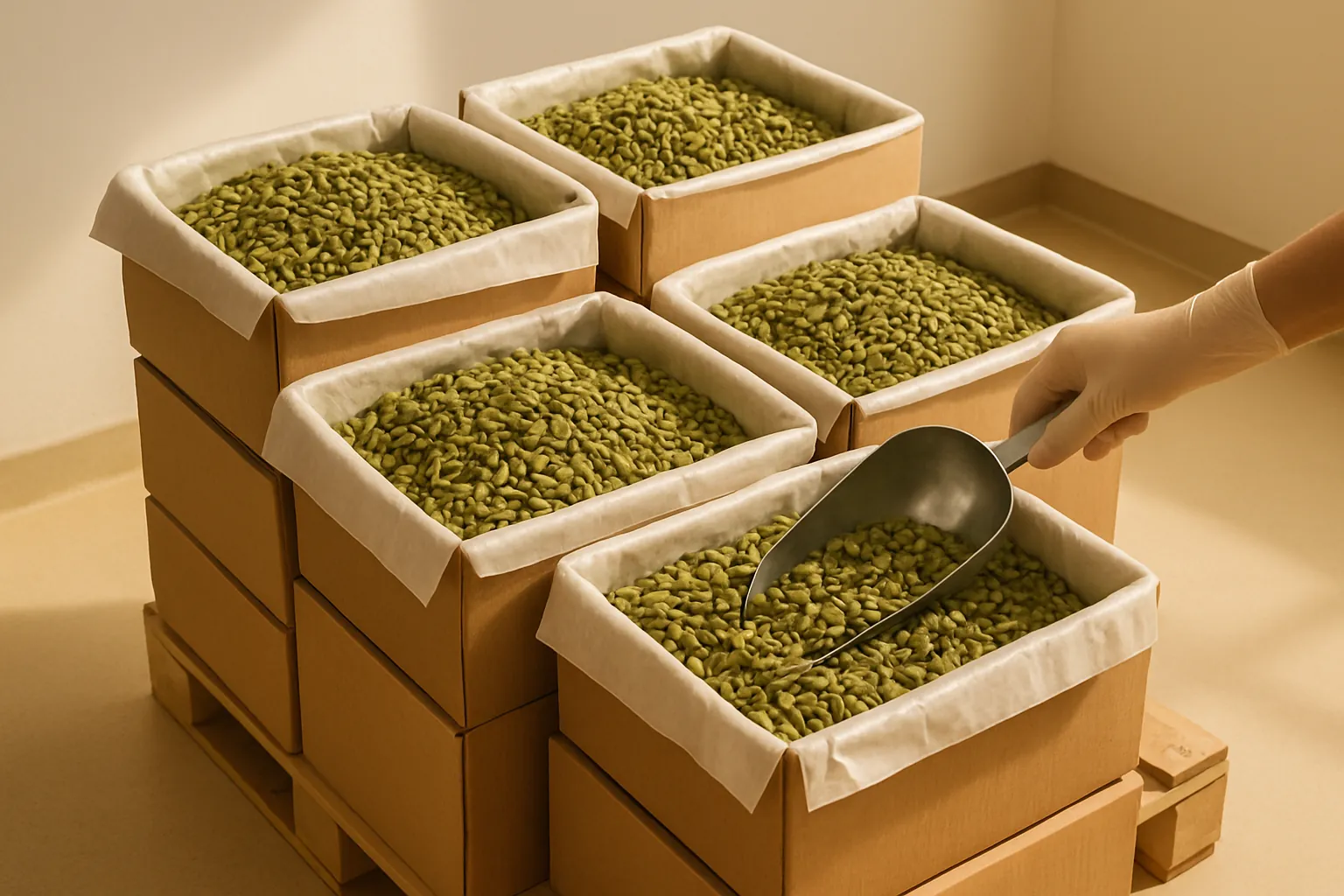
- Cardamom packs in 5/10/20 kg food-grade cartons with vacuum or foil-lined sealed liners to protect moisture, colour and oil.
- Consolidation with Afri Exports' cashew, sesame or vanilla lets a cardamom pallet share one booking and bill of lading.
- High value density means small lots can move by airfreight, useful when colour and freshness are time-critical.
The first question every wholesale cardamom buyer asks is how much they have to take. Our starting commercial MOQ is 500 kg of one grade. That is a serious pallet-scale order, but it does not force a buyer into a full container. This guide explains the sample, commercial order, packing and consolidation steps that make a first purchase easier to check.
What is the MOQ for wholesale cardamom?
Our commercial floor is 500 kg of one grade. Pods are light and valuable, so that weight already represents a substantial consignment. It can move as less-than-container freight or be consolidated where the route and cargo plan allow. The fixed costs of documentation, inspection and handling still apply, which is why we do not advertise small paid trial lots below the commercial minimum.
Can I approve a sample before the commercial order?
Yes. We draw a representative sample from the proposed lot so your team can check grade, colour, moisture and aroma before confirming the 500 kg order. If the cardamom will be milled, brewed, baked or extracted, test the sample in that process. Keep one sealed portion as the reference for the arrival inspection.
How is wholesale cardamom packed, and what does it cost?
In food-grade cartons, commonly 5, 10 or 20 kg, with the pods sealed inside vacuum or foil-lined liners that hold moisture in and light and air out. The packing choice is not cosmetic: cardamom's green colour and volatile oil both degrade with exposure, so the liner is doing quality-control work all the way to the destination. Vacuum and barrier packing cost more per kilogram than loose woven bagging, but against the value of the pods the premium is small and the protection is decisive. The options in short:
- 5/10 kg vacuum cartons: premium retail and colour-critical lots, including airfreighted orders.
- 20 kg foil-lined cartons, commercial pallet quantities for grinders, blenders and repackers.
- Nitrogen-flushed or vacuum liners, where maximum shelf life and colour retention justify the extra step.
Can cardamom be consolidated with other commodities?
It can, and for a first order it is often the smartest route in. Afri Exports ships Tanzanian cashew, sesame and vanilla alongside cardamom, so a cardamom pallet can travel with another commodity on a single booking and one bill of lading, the shared fixed costs spread across more cargo, and each product keeps its own lot numbers, laboratory reports and certificates. A distributor trialling two or three Tanzanian lines at once pays for one shipment, not three, and receives fully documented, separately traceable lots.
“A first cardamom pallet is a real commitment, so we make the representative sample and written specification useful, not a formality.”
- Daniel Mahenge, Logistics Coordinator
What changes as order volume grows?
- Representative sample: bench or production verification before the commercial order is confirmed.
- 500 kg of one grade: our starting commercial order, suitable for pallet or less-than-container freight.
- One tonne and above: larger grade allocation with packing and routing planned around the programme.
- Multi-pallet and repeat programmes, advance allocation against the curing season, multi-grade contracts and packing customisation.
If you are sizing a first order, send us the grade, destination and volume your line actually consumes. We will quote from our 500 kg commercial minimum and show larger pallet options where useful, with sea and air routes where they make sense. Tell us if you want to consolidate with cashew, sesame or vanilla and we will assess the shipment plan.
Related reading
Related reading

Leave a Comment
Your email address will not be published.