


At a glance
- Importing Tanzanian cardamom follows seven steps: enquiry, sample, contract, payment, documentation, shipping, arrival check.
- Our starting commercial order is 500 kg of one grade, with a representative sample available before confirmation.
- Payment runs on LC at sight or TT, typically a deposit with the balance against shipping documents.
- The contract must fix grade and pod size (mm), a colour reference, moisture (10–12% max), cleanliness, packing and Incoterm.
- Documents include commercial invoice, packing list, certificate of origin, phytosanitary certificate and per-lot lab reports.
- Lots ship FOB from Dar es Salaam: by airfreight for premium colour-critical orders or by sea for consolidated pallets.
Importing wholesale green cardamom from Tanzania follows a predictable seven-step path: define what you want, approve a sample, contract with an explicit specification, arrange payment, confirm documentation, ship FOB from Dar es Salaam, and verify the delivered lot. The path is the same as for any commodity, but cardamom's high value and delicate colour change the emphasis at every step, a sample matters more, packing matters more, and the arrival check is about aroma and colour as much as weight. This guide walks each step, what we provide, and the mistakes first-time cardamom importers most often make.
Step 1, Send an enquiry that defines the lot
Before any quote is meaningful, tell us three things: the grade and pod size you want (Extra Bold 8 mm+, Bold 7–8 mm, Superior 6–7 mm or Shipment 6 mm), the colour and any oil expectation, and the volume and destination. Our starting commercial order is 500 kg of one grade. The more precisely you describe the pods your product needs, the more comparable the quotes you receive and the less chance of a size or colour mismatch later.
Step 2, Receive and approve a sample
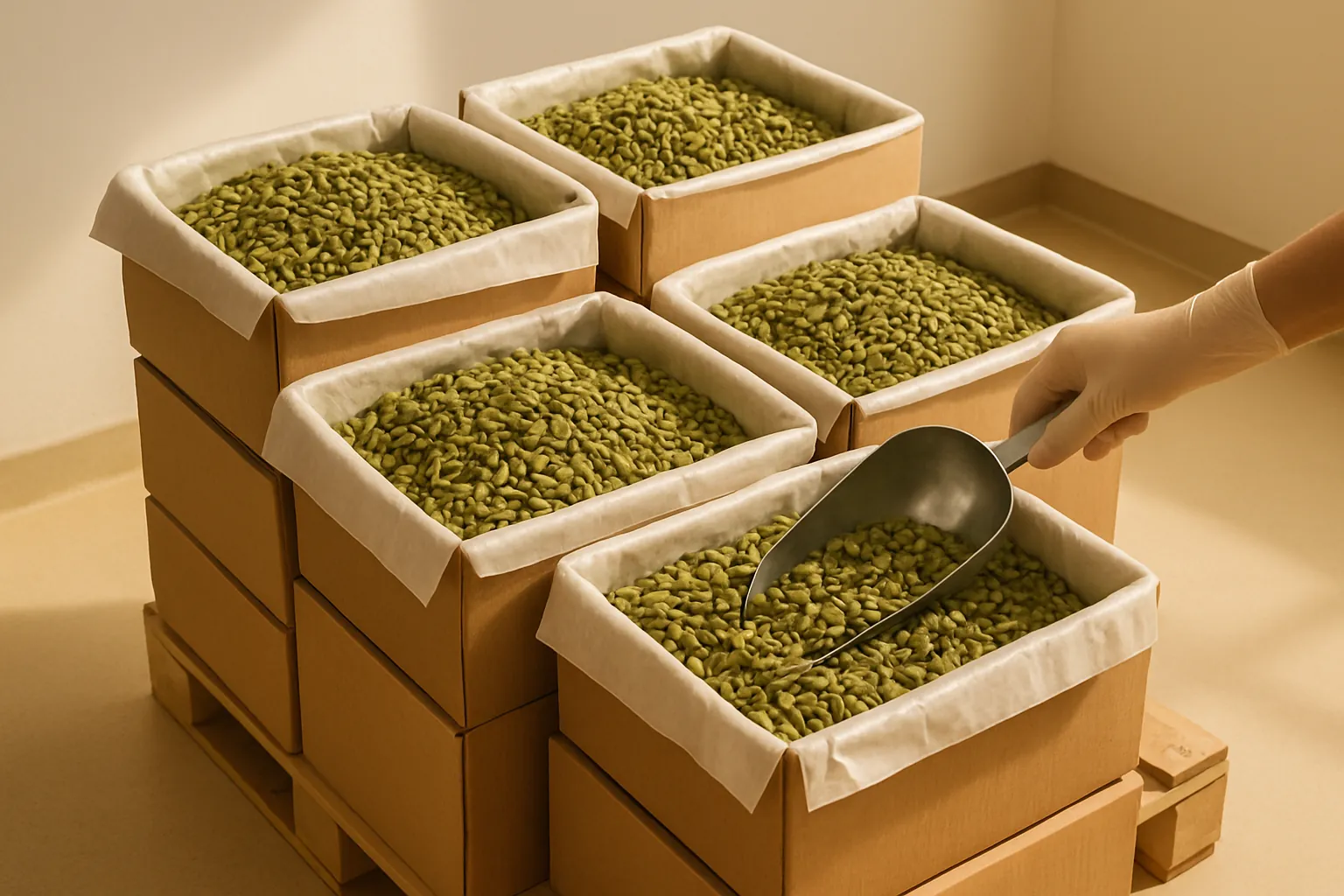
With a high-value spice, the sample is not a courtesy; it is the contract in miniature. Ask for a representative 0.25 to 1 kilogram sample drawn across the lot, sent by courier with the lot's laboratory numbers. Check pod size and colour in a dish, crush a few pods to judge aroma, and confirm the moisture and cleanliness match what was quoted. Retain part of the sample sealed, it becomes your reference for the arrival check. A serious exporter sends the sample without haggling over who pays the courier.
Step 3, Sign a contract with an explicit specification
A complete cardamom contract names what the pods must be, so the delivered grade and the contract grade describe the same lot:
- Grade and pod size, e.g. Bold, 7–8 mm over screen.
- Colour reference, deep green to an agreed standard.
- Maximum moisture, 10 to 12 per cent.
- Cleanliness, limits on stalks, splits, immature pods and extraneous matter.
- Volatile-oil content, where you extract or blend for flavour, assayed per lot.
- Packing, net weights and Incoterm, carton format, liner type, and FOB, CFR or CIF.
Step 4, Arrange payment under LC or TT
Wholesale cardamom trade runs on Letter of Credit (LC at sight) or Telegraphic Transfer (TT), typically as a deposit at contract with the balance against shipping documents. Because cardamom consignments are smaller and high in value, terms are agreed per order rather than by a fixed formula, and a first contract usually carries a slightly more cautious structure than a repeat buyer's. Agree the mechanism and the split before the lot is packed, so the shipment is never held up at the paperwork stage.
Step 5, Confirm the documentation set
Once the lot is cured, graded, lab-released and packed, we prepare the export documentation. A complete cardamom pack from Tanzania typically includes:
- Commercial invoice and a detailed packing list with lot numbers.
- Certificate of origin and the phytosanitary certificate.
- Laboratory reports tied to the shipped lot, moisture, cleanliness and, where required, volatile-oil content.
- Bill of lading (sea) or air waybill (air), with full consignment details.
- Processing and traceability records on request.
Step 6, Ship FOB from Dar es Salaam
Our default gateway is Dar es Salaam, Tanzania's main commercial port, and we quote FOB by default with CFR and CIF available on request. The mode depends on the lot: high-value, colour-critical orders can move by airfreight, which shortens exposure to heat and time, while larger or consolidated pallets go by sea. Where it makes sense, a cardamom pallet can share a container and booking with our cashew, sesame or vanilla while keeping its own lot documents. Confirm the routing and mode early so transit time is planned, not discovered.
Step 7, Verify the delivered lot
On arrival, draw pods from several cartons before signing off. Check moisture first, it is the fastest indicator of transit trouble, then colour and aroma against the sample you retained, and confirm the grade and pod size match the contract. Green that has dulled sharply or an aroma that has flattened points to heat or moisture exposure in transit, and it is far easier to resolve while the consignment is still documented and unopened in bulk than after the pods are in production.
“With cardamom the contract is only half the deal; the sample you kept is the other half. Hold it back, sealed, and the arrival check answers itself, the delivered pods either match your reference or they do not.”
- Daniel Mahenge, Logistics Coordinator
Common mistakes new importers make
- Negotiating price before grade, pod size and colour are fully defined.
- Treating the sample as marketing rather than the reference for the arrival check.
- Leaving moisture, cleanliness and oil expectations out of the contract.
- Underestimating how much heat and time in transit dull a delicate green pod.
- Skipping the arrival check and discovering colour or aroma drift after the lot is in production.
Related guides
Related reading

Leave a Comment
Your email address will not be published.