

At a glance
- Green cardamom's aroma comes from a volatile essential oil in the seeds, running roughly 6–8% by weight.
- Two compounds dominate: 1,8-cineole (fresh, camphoraceous, eucalyptus-like) and α-terpinyl acetate (sweet, floral, fruity).
- The ratio between them sets the character, more terpinyl acetate reads fine and sweet, more cineole reads sharp and medicinal.
- Bold, well-cured pods retain more oil, which is why size and oil content interest flavour and extraction buyers.
- Heat, light and time drive off the oil and bleach the green, so deep colour is a proxy for retained aroma.
- Slow, low-temperature curing and barrier packing preserve oil and colour together.
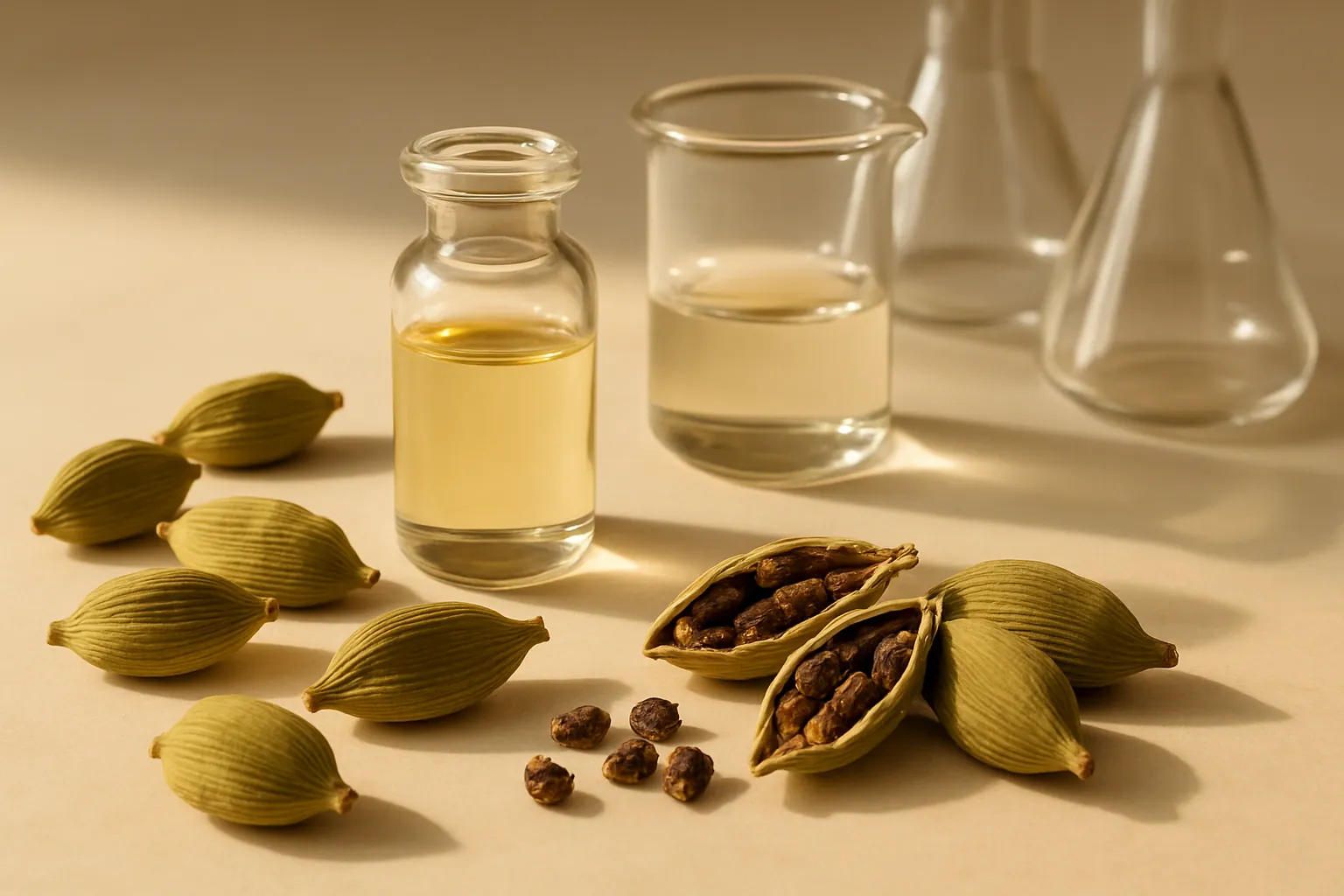
When a buyer smells a dish of green cardamom, they are smelling chemistry, a volatile essential oil held in the small dark seeds inside each pod, released the moment the pod is crushed. For a cook that oil is simply aroma. For a flavour house, an oleoresin extractor or a quality manager writing a specification, it is a measurable, specifiable asset. This guide explains what is in the oil, why the balance of two key compounds matters, roughly how much oil a good lot carries, and why the pod's green colour is the visible sign of the invisible thing a buyer is really paying for.
What gives green cardamom its aroma?
The seeds, not the husk, carry the aroma, and they carry it as a volatile essential oil that is a complex mix of terpenes and their esters. Two components do most of the work. The first is 1,8-cineole, also called eucalyptol, which is fresh, cooling, camphoraceous and penetrating; it is the same molecule that dominates eucalyptus oil, and it gives cardamom its lift and its medicinal edge. The second is α-terpinyl acetate, which is sweet, floral, softly fruity and fine; it is the note that makes good cardamom smell luxurious rather than merely sharp. Smaller amounts of limonene, sabinene and linalool round out the profile.
How much essential oil does a good lot carry?
As a working figure, roughly 6 to 8 per cent of the seed's weight is volatile oil, though the exact number depends on origin, grade, curing and storage. That is a high oil load for a spice, and it is why cardamom is a raw material for the fragrance and flavour industries as well as the kitchen. The oil sits in the seed, so anything that protects the seed protects the value: pods picked at the right maturity, cured slowly and stored well hold their oil, while pods that were over-dried, aged or crushed have already lost some of it to the air. Bold, well-filled pods carry more seed per pod and therefore more oil per kilogram, the practical link between the grading scale and the aroma.
Why does the cineole-to-terpinyl-acetate ratio matter?
Because it decides the character of the aroma, and different buyers want different characters. A lot weighted toward α-terpinyl acetate smells sweet, floral and fine, the profile prized in perfumery, premium confectionery and top-shelf flavour work. A lot weighted toward 1,8-cineole smells sharper, cooler and more medicinal, which suits some savoury and functional uses but reads as harsh where a delicate note is wanted. Neither is 'better' in the abstract; the balance is a style choice. Extraction and flavour buyers who care about it can specify against the ratio, and a per-lot oil analysis is what makes that specification enforceable.
“Cineole is the announcement and terpinyl acetate is the elegance. The pods that command the best prices have both in balance, and you can smell the balance long before a chromatograph confirms it.”
- Asha Ngonyani, Quality Manager
How do colour and curing protect the aroma?
This is where quality control and flavour meet. The volatile oil is exactly that, volatile, so heat, light and time steadily drive it off. Those same conditions bleach the pod's chlorophyll, turning deep green toward pale straw. That coincidence is a gift to buyers: green colour is a visible proxy for retained oil. A vivid green lot has almost always been cured slowly at a low, controlled temperature and stored away from heat and light, which is precisely the treatment that keeps the oil in the seed. A bleached lot has usually been sun-dried or over-heated, and it has lost aroma and colour together. Judging cardamom by its green is not superstition; it is reading the oil through the husk.
What this means for a specification
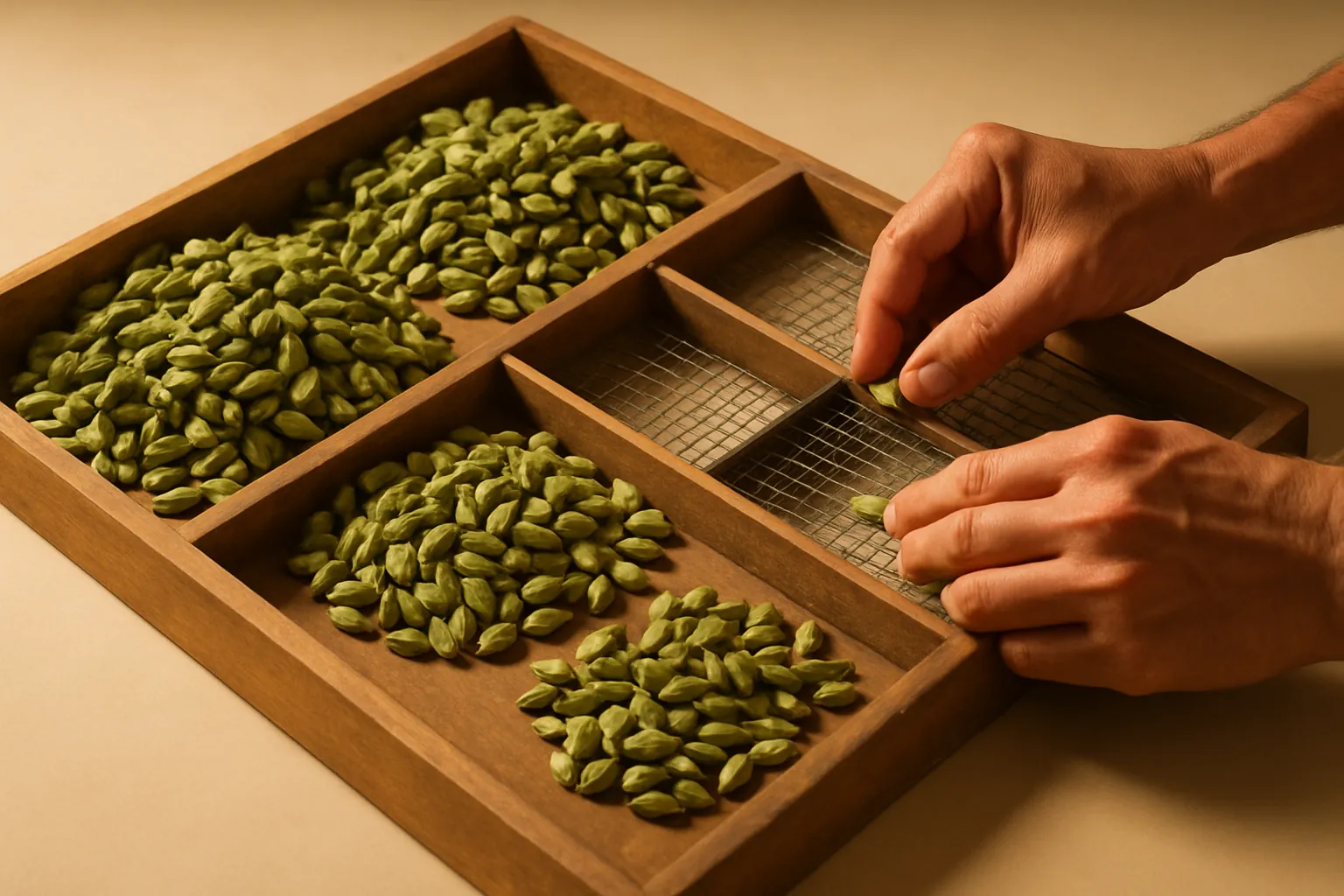
- State the grade and pod size, bold pods carry more oil per kilogram than shipment grades.
- Set a colour reference, deep green signals retained volatile oil, not just visual appeal.
- Specify a moisture ceiling of 10–12%, over-dry pods have already begun shedding oil.
- Ask for a volatile-oil figure if you extract or blend for flavour, assayed per lot, not quoted as an origin average.
- Where character matters, discuss the cineole-to-terpinyl-acetate balance rather than a single oil number.
Our slow-cured single-origin lots from the Eastern Arc highlands are graded and lab-checked before despatch, and we can provide volatile-oil figures for buyers whose product depends on them. If you extract, distil or blend for flavour, tell us the profile you are chasing and we will match a grade and, where needed, a lot to it.
Related reading
- How green cardamom is graded- Why bold pods carry more oil
- Inside Tanzania's cardamom harvest and cure- How slow curing locks in oil and colour
- Storing and shipping cardamom- Protecting volatile oil in transit
- Bold Green Cardamom 8 mm+- High oil per kilogram
- Green Cardamom 7–8 mm- Bold pods for flavour and retail
Related reading

Leave a Comment
Your email address will not be published.