
The short answer
If your cardamom programme depends on one origin, the 2026/27 season is a sensible time to qualify a second one, but on a small, measured trial rather than a switch. Guatemala, the largest exporter, shipped 0.4 million quintals in 2025 on preliminary Banco de Guatemala figures, down from 1.1 million in 2023. India has fresh crop moving through its auctions but consumes much of what it grows. Tanzania cannot fill either gap in tonnage. What it can offer is a traceable, slow-cured green cardamom that you can test on one grade, at 500 kg, and keep on file.
What the public data show this season
- Guatemala: the central bank's export volume table records cardamom at 1.2 million quintals in 2022, 1.1 million in 2023, 0.6 million in 2024 and 0.4 million in 2025, the last figure preliminary.
- Guatemala: Infobae reported on 21 February 2026 that the 2024 drought cut production and exports, and that 350,000 seedlings raised in 2025 were due to be planted on about 300 hectares during 2026.
- India: on 19 October 2026 the Spices Board listed two small cardamom e-auctions with about 104,000 kg sold between them, at averages of ₹3,133.86 and ₹3,056.63 per kg. These are domestic auction averages across grades, not export prices.
- Freight: Enterprise reported on 19 October 2026 that most shipowners were keeping vessels out of the Strait of Hormuz, with UAE-bound containers landing at Khorfakkan and Sohar and trucked inland.
None of this tells you where prices will go, and we do not forecast them. It does tell you where the risk sits. The largest exporter is rebuilding from a small base, replanting takes seasons to show up in exports, and the premium Gulf market is being served by a longer, more expensive route. A buyer with one qualified origin has fewer options if any of those moves the wrong way.
Decide what the second origin is for
A second origin works when it has a clear job. Some importers want a backup for a single grade, usually a 6 to 7 mm pod for milling or blending, so that a short crop elsewhere does not stop a production line. Others want a colour-led premium line for whole-pod retail or gahwa, where a deep green, slow-cured pod earns its place on appearance. Others want decorticated seed for bakery or extraction. Pick one job for the trial. Trying to replace a whole range at once makes the comparison impossible to read.
The qualification checklist
- Write the specification first: product form, screen size, colour reference, maximum moisture, foreign matter and empty-pod limits, and a volatile-oil minimum if aroma drives the purchase.
- Ask for a representative sample drawn across the proposed lot, not a hand-picked display sample, and keep a sealed portion as the arrival reference.
- Run the sample through your real process: grind it, brew it, bake with it or extract it, beside your current origin.
- Agree the laboratory panel before the order, including any residue or microbiological tests your destination requires, and check that the report names the lot.
- Confirm traceability: the district, curing batch and lot code should connect the sample, the certificate of analysis, the packing list and the cartons.
- Normalise the quote: same grade, weight, packing, Incoterm and test set as the quote you are comparing it with.
- Name the route: discharge port, sea or air, FCL or LCL, and who handles the last leg to your warehouse.
- Set the arrival check: where samples are drawn, what is measured and how a deviation is settled while the shipment is still open.
Where Tanzanian cardamom fits, and where it does not
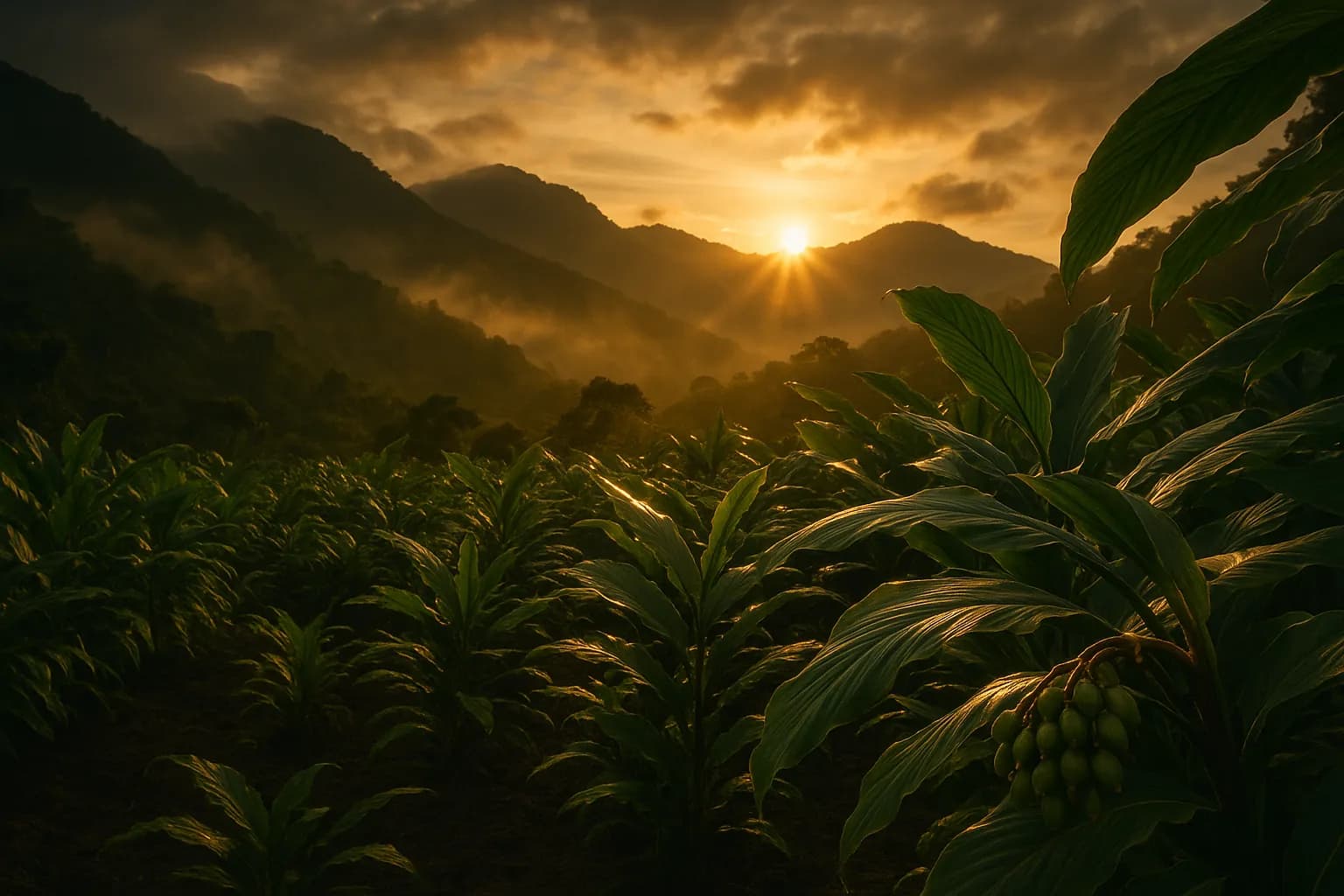
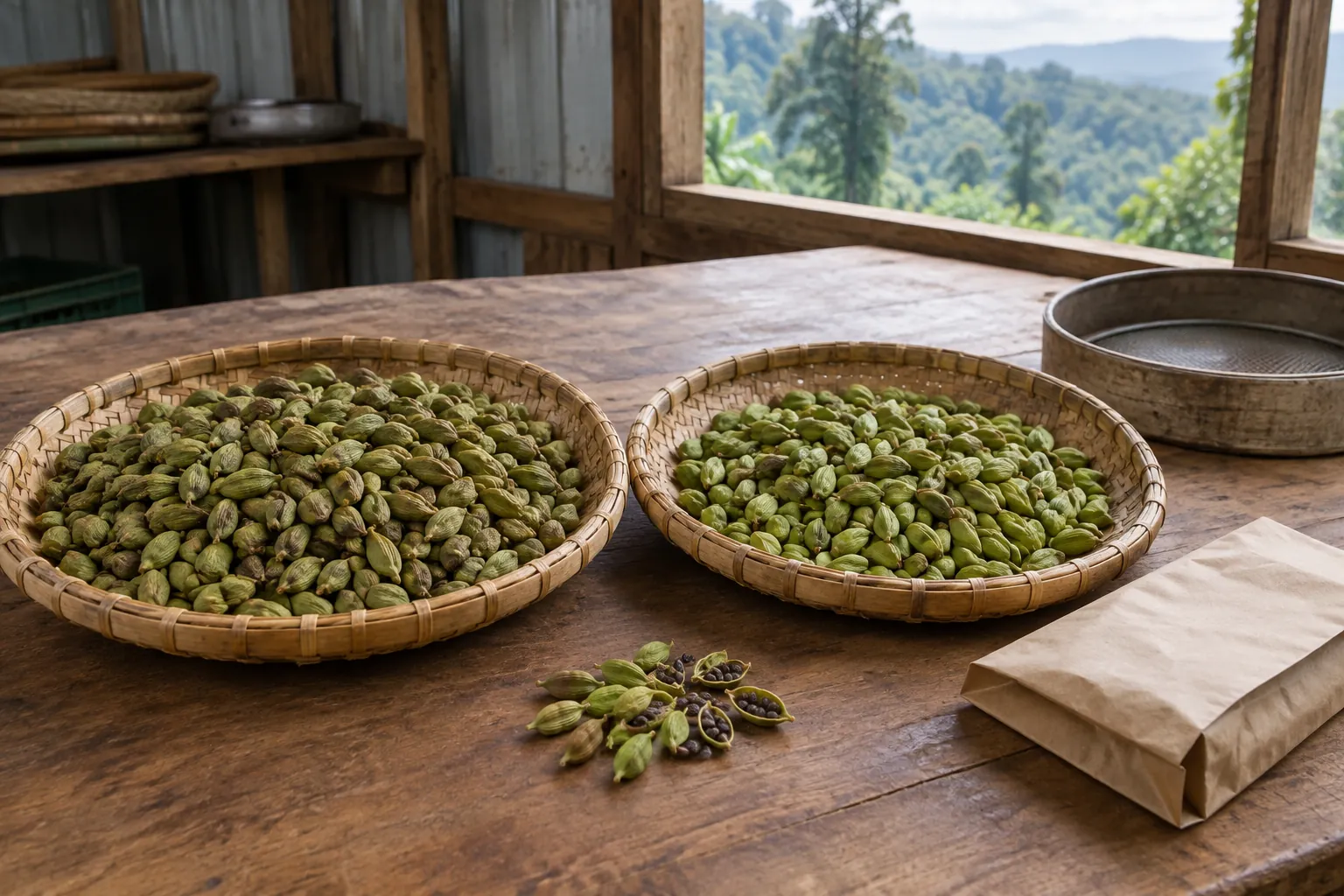
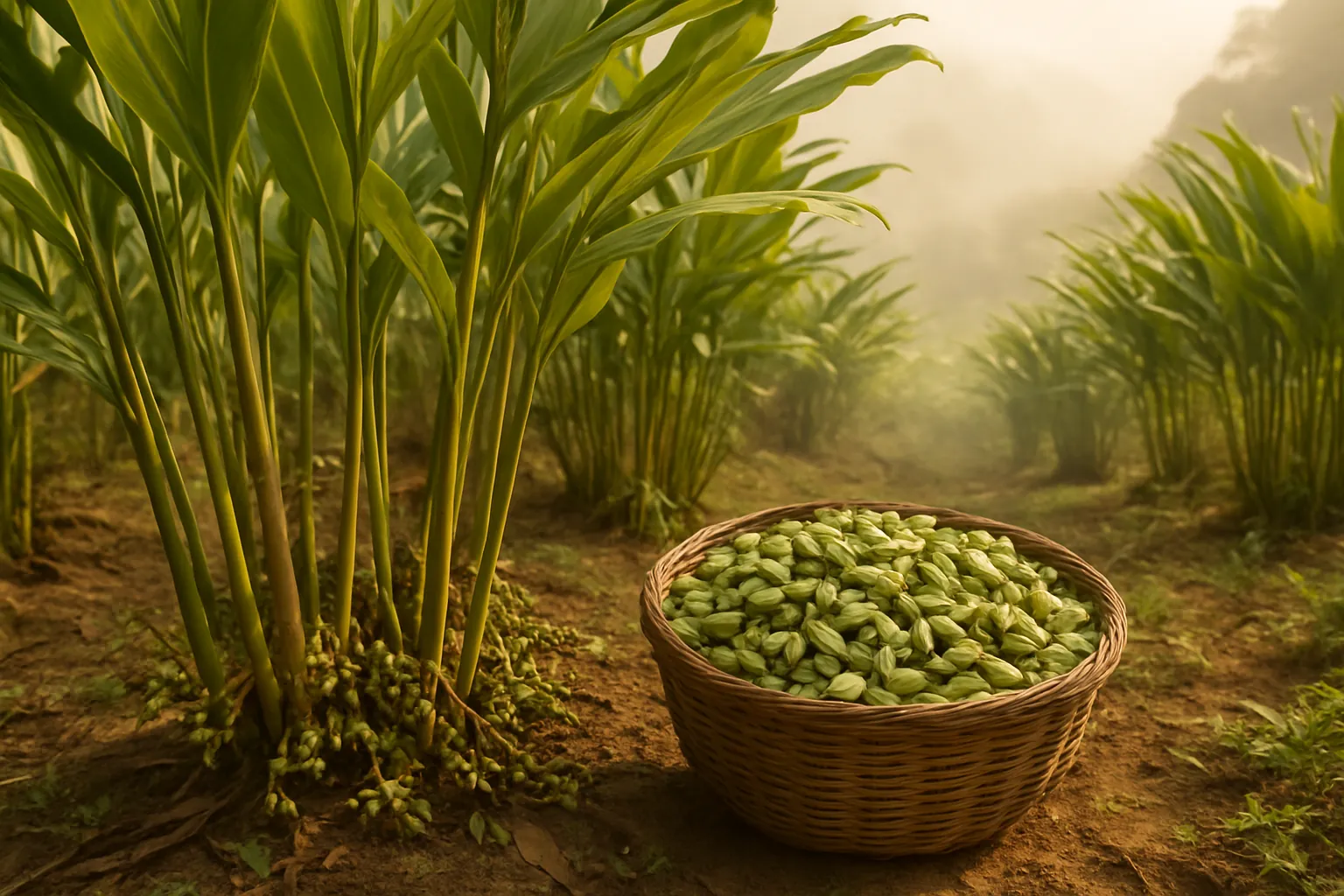
Our cardamom is grown under forest shade in the Eastern Arc highlands, the Uluguru Mountains behind Morogoro and the Usambara Mountains of Tanga, hand-picked over several rounds and slow-cured to hold its colour. We sell it in grades from bold 8 mm pods to a 6 mm shipment grade, plus decorticated seeds. India and Guatemala appear in this guide as market context only. We do not source from either, and a Tanzanian lot should be judged on its own sample and report, not on another origin's reputation.
The limit is volume. Tanzania is a small producer next to the two main origins, so it is the wrong choice if you need hundreds of tonnes on a single contract. It suits a buyer who wants one grade they can trace to a mountain range and a curing batch, at a scale that lets them test it properly.
Shape the first order so it teaches you something
Our starting commercial MOQ is 500 kg of one grade, packed in 5 or 10 kg paper-lined cartons. That is large enough to run through a real receiving and production process and small enough that a disappointing result does not hurt the business. Small lots and samples can move by air on FCA, CPT or CIP terms; larger orders can travel by sea from Dar es Salaam in LCL consolidation. For Gulf buyers, build the current routing into the lead time from the start, and work back from the date the stock must be on the shelf, including the run-up to Ramadan.
If the trial lot matches the approved sample on arrival, you have a qualified second origin on file before you need it. If it does not, the retained sample and agreed checks give both sides a clear basis to settle the difference. Send us the grade, use, volume and destination and we will return a sample plan and an indicative FOB quote.
Plan the trial
- Wholesale green cardamom supplier overview- MOQ, grades, process and documents
- Green Cardamom 6 to 7 mm- A practical grade for a backup line
- Bold Green Cardamom 8 mm+- Colour-led whole-pod grade
- How to choose a wholesale cardamom supplier- The full supplier checklist
- Cardamom certificate of analysis checklist- Reading the lot report
- Cardamom price trends 2026- What moves the market
- Gulf cardamom buyers and the freight squeeze- Routing and lead time into the Gulf
- Request a sample and quote- Send grade, use, volume and destination
Sources
- Banco de Guatemala: export volume of selected agricultural products, 1994 to 2025- Cardamom in millions of quintals; 2025 preliminary; consulted 20 October 2026
- Infobae Guatemala: EU cooperation and cardamom after the 2024 drought- 21 February 2026
- Spices Board India: daily small cardamom auction prices- 19 October 2026 auctions, consulted 20 October 2026
- Enterprise: the war is pushing Gulf container trade to ports outside Hormuz- 19 October 2026
Related reading
Leave a Comment
Your email address will not be published.